
How to recognize negative self-talk as a homeschool mom? Here’s what I hear from homeschool moms all the time: I need to give myself more grace. And when I ask What are you being hard on yourself about? they often can’t quite put it into words.
That’s because not every hard homeschool moment is actually a negative self-talk problem. Sometimes you’re just tired. Sometimes the curriculum genuinely isn’t working. And sometimes your kid is having a legitimately difficult day.
But there’s a specific moment when a normal challenge crosses over into something else—into harsh self-criticism that sabotages your best intentions and makes everything harder. Understanding negative self-talk as a homeschool mom is crucial because it’s often the hidden barrier between surviving and actually enjoying your homeschool.
Let me show you the difference.
How to Recognize Negative Self-Talk as a Homeschool Mom? Here’s the Critical Shift
A normal homeschool challenge becomes negative self-talk when your thoughts shift from describing a situation to attacking yourself:
- This is hard becomes I’m bad at this
- I made a mistake becomes I always mess up
- I’m tired becomes I’m lazy
- This isn’t working becomes I’m failing them
- My child is struggling becomes I’m ruining their future
See the pattern? The left side describes what’s happening. The right side makes it mean something terrible about who you are.
This is what negative self-talk looks like in real time. It’s not just being frustrated or tired—it’s the voice that takes a normal challenge and twists it into evidence that you’re failing.
Real Examples: How to Recognize Negative Self-Talk as a Homeschool Mom in Action
Let me give you some concrete scenarios to help you identify negative self-talk when it shows up.
Example 1: The Math Meltdown
Situation-focused thought: This curriculum isn’t clicking for my kid. I need to try a different approach.
This needs a PRACTICAL solution (new curriculum, different teaching or learning approach)
Self-attack thought: I can’t even teach basic math. I’m failing her. Other moms can do this.
This needs THOUGHT CARE (recognizing the harsh inner critic)
Example 2: The Messy House
Situation-focused: I’m exhausted and the house is a disaster. I need help.
This needs REST and SUPPORT
Self-attack: I can’t keep a clean house AND homeschool. What’s wrong with me? Other moms manage both.
This needs THOUGHT CARE
Example 3: Getting Frustrated As We Do Our Readaloud
Situation-focused: My daughter processes differently than I do. That’s challenging for me sometimes.
This needs AWARENESS and maybe STRATEGY (audiobook instead, or allowing her to play as she listens)
Self-attack: I get so annoyed with my daughter. A good mom would be more patient. I’m so selfish.
This needs THOUGHT CARE

The Negative Self-Talk Loop
Once negative self-talk as a homeschool mom kicks in, it creates a specific pattern that keeps you stuck. Here’s how the loop works:
- Triggering situation (kid doesn’t get the math, you snap at them, the day goes off-plan)
- Harsh interpretation of YOURSELF (I’m not enough / I’m failing / I’m bad at this)
- Emotional reaction to that harsh thought (guilt, shame, anxiety)
- Either spiral deeper OR react from that emotional place, which creates another triggering situation
This is the loop that makes everything harder. And this is when tools like the Thought Care Checklist become essential—because you need a way to interrupt that harsh interpretation before it spirals.
This loop is exactly what we break down in the workshop. You’ll learn how to catch yourself in step 2 (the harsh interpretation), interrupt it before the spiral starts, and replace those attacking thoughts with accurate, compassionate ones—so you can respond to homeschool challenges from groundedness instead of panic.
Join the Workshop →

Why Negative Self-Talk as a Homeschool Mom Is So Common
Negative self-talk as a homeschool mom is incredibly common—and it makes sense why. You’re responsible for your children’s entire education, their development, and often managing the household too. Every decision feels weighted with deep responsibility. So when things go wrong, it’s easy for your brain to jump to this means I’m failing them instead of this is just a hard moment.
Add to that the comparison trap—seeing other homeschool families who seem to have it all together—and you have the perfect recipe for harsh self-criticism.
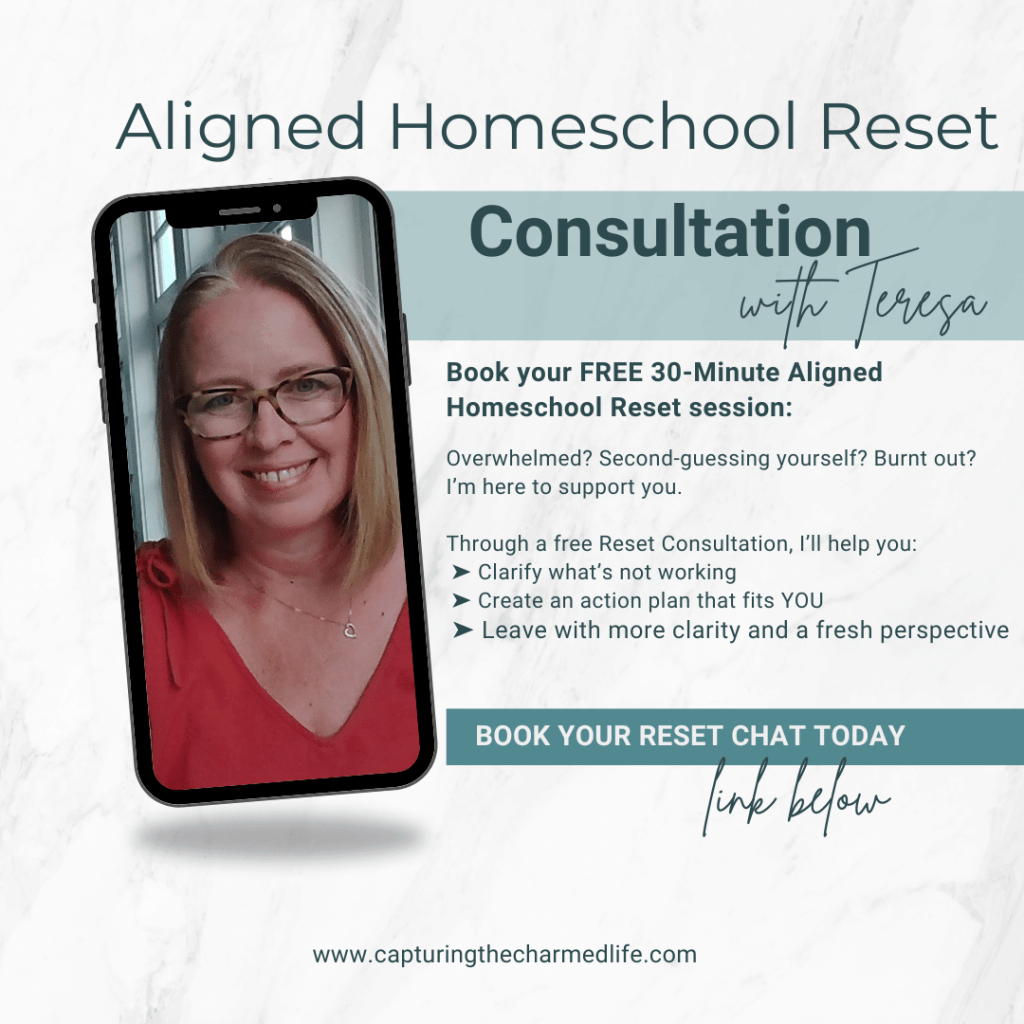
If you’re reading this and thinking this is me—I’m stuck in this loop and I can’t get out, you don’t have to figure this out alone. An Aligned Homeschool Reset session gives you 1:1 support to identify YOUR specific negative self-talk patterns, interrupt the loops that are keeping you stuck, and create a personalized plan to move forward with clarity and confidence.
Book Your Aligned Homeschool Reset Session →
When You DON’T Need Thought Care
Here’s what’s equally important to understand: not every hard moment requires thought work.
Sometimes you’re just:
- Tired and need rest
- Problem-solving a genuine challenge
- Having a legitimately bad day
- Dealing with a difficult child moment that has nothing to do with you
- Navigating a real, external challenge
In those moments, you need:
- A nap or break
- Practical help or a new curriculum
- To lower your expectations for the day
- To ask someone for support
- Or to acknowledge this is just hard right now without making it mean something about you
Thought Care can’t fix your exhaustion. It can’t fix a curriculum that’s not working. It can’t magically fix a genuinely difficult day.
But it WILL help you when your brain tries to make a situation mean something terrible about who you are.
The One Question That Changes Everything
So when things feel hard, here’s the diagnostic question to ask yourself:
Am I frustrated with the SITUATION, or am I being harsh with MYSELF about the situation?
If you’re frustrated with the situation, you need practical solutions, rest, or adjustment
If you’re being harsh with yourself, you need Thought Care
Both are valid. Both matter. They just need different responses.
Want help actually USING this question? Download the free Thought Care Checklist—it walks you through exactly how to identify whether you need practical solutions or thought care, then gives you the framework to interrupt negative self-talk in the moment.
Get the Free Thought Care Checklist →

What Thought Care Actually Does
The Thought Care Checklist is specifically designed to interrupt the negative self-talk loop. It’s not a reflective practice you do at the end of the day when you have time.
It’s a mental framework you can use IN THE MOMENT when you catch yourself spiraling:
- Observe Feelings: Notice when the inner critic shows up
- Determine Thoughts: What is that critical voice actually saying?
- Reframe Thoughts: Is this harsh self-talk actually true? Are you 100 percent certain?
- Act Intentionally: Choose a kinder, more accurate thought on purpose
This isn’t about toxic positivity or pretending hard things aren’t hard. It’s about creating boundaries for your mind so you don’t let the inner critic run wild and sabotage your homeschool.
The Bottom Line: Not every homeschool struggle is a mindset problem.
Sometimes you just need res or help; and, sometimes homeschooling is genuinely challenging, and that’s not a reflection of you.
But when negative self-talk shows up—that harsh voice saying you’re not enough, you’re failing them, you’re bad at this—that’s when you need a tool to interrupt the spiral.
That’s when the Thought Care Checklist becomes a helpful practice. Because you deserve to homeschool without constantly battling that critical voice in your head.
Ready to quiet that harsh inner voice?
Get the free Thought Care Checklist—a simple 4-step framework to help you recognize negative self-talk, question harsh thoughts, and show up calmly for your kids instead of reacting from overwhelm.
Download Your Free Thought Care Checklist Here →
Aligned Life & Homeschool Coaching
If you’re craving more than a moment of clarity — if you want transformation that becomes your new normal — the Aligned Homeschool Reset Session is your next step.
Teresa works with homeschool moms who are feeling overwhelmed, burned out, or quietly questioning if they’re enough. She’s been exactly where you are — navigating chaos, building confidence, and creating intentional, joyful homeschool lives.
In an Aligned Homeschool Reset Session, you’ll:
- Clarify your values and priorities so you can homeschool with confidence
- Explore practical strategies for leading your life and your family with intention
- Discover ways to show up fully for your kids while staying grounded and energized
If you’re ready to stop surviving and start thriving, Teresa would love to walk alongside you.
You May Also Want to Read:
- You’re Not Failing—You’re Just Carrying Too Much | Overcome Homeschool Burnout
- The Real Reason You’re Overwhelmed (It’s Not the Curriculum)
- Brene Brown Inspiring my Thoughts & Informing my Homeschool
- How to Tame the Homeschool Stress Dragon with 23 Strategies
- Deal with Your Homeschool Mom’s Big Emotions: Taming Thoughts
- how to positively influence my homeschool mama thoughts so I can enjoy my homeschool
- remembering our homeschool freedoms: don’t forget the gift in your child
- 5 Ways We Can Include Self-Compassion for Homeschool Moms
- Burnout to Balance: How Boundaries Changed My Homeschool Life
